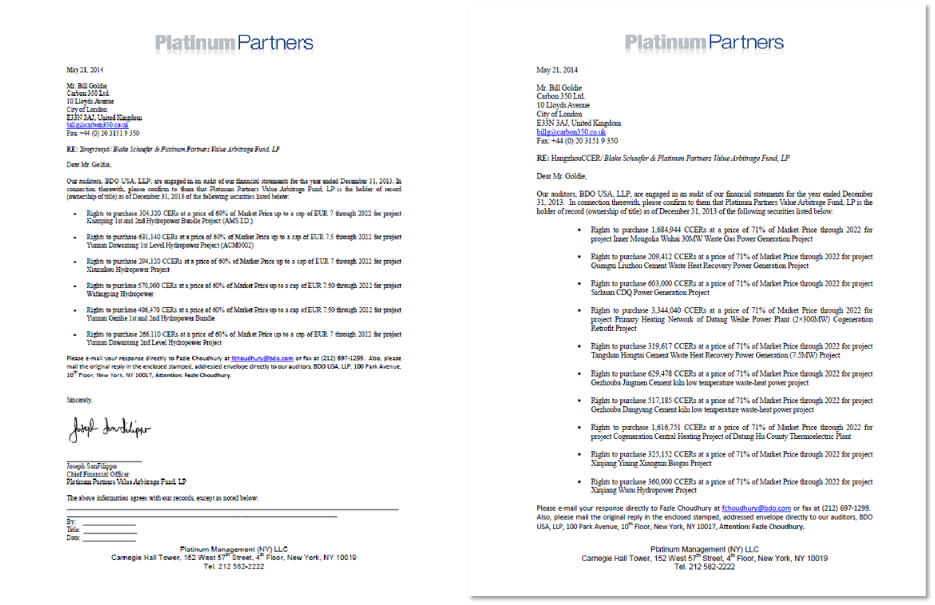
As evident, our team, especially, with the takeover of Carbon 350, has tacit knowledge of this type of market. With the Clean Development Mechanism, the precursor for Article 6 of The Paris Agreement, while my first project was municipal waste composting in India in 2008, and my last was a 1500 MW Hydro in Ecuador in 2013, there is generally a hotspot for development. Accordingly, the majority of the circa 50 projects I was involved in were completed in China.
Why China ? If I distil the reasons why to the bare essentials, I come up with rapid GDP Growth, transiting economy (developing to developed), Government will and support and the value of assistance we could provide. For Article 6 projects, the Pacific Basin or South America, could be possible, but they were difficult to deal with before, ditto India.
Accordingly, in January, I reached out to environmental developers in Ghana, Tanzania and Kenya, being three African states with relatively high business favourability ratings. We engaged with a developer in Ghana, with ambitious plans, which led to my trip to Accra and Wa, a province in the north West, past Kumasi.
Ghana has GDP growth of circa 6-7% and Accra is a mixture of shiny new buildings, cranes and considerably less developed infrastructure. This is what I wanted to see. It is also rapidly becoming a centre of agriculture: Wa, thecapital of the Upper West Region, receives some of the highest solar irradiation levels in the world. Daily global horizontal irradiance (GHI) averages between5.2 to 5.6 kWh/m²/day, peaking at up to 6 to 7 kWh/m²/day during the hottest months and abundant water resources.
We now have an agreement with our Ghanian Partner, with a 75%/25% split in Global ITMOs favour, with two of their founding directors joining Global ITMO Ltd, the newly formed company.
Global ITMO will deploy environmental technologies and genetically modified seeds to increase farming loads, seasons and yields in return for a 40% shareof resulting revenue and 75% of the ITMO revenue.
In Ghana, you can typically expect to grow 12 to 20 metric tons of fresh ginger per hectare every 8-10 months. Once exported to the UK, 1 metric ton of unprocessed wholesale ginger can fetch between £1,950 and £3,650. Taking the midpoints, this will generate £44,800 per hectare. On anine month growing cycle this would generate £59,584 per hectare per year.
You can expect to harvest 20 to 30 tons of fresh, unprocessed turmeric from one hectare inGhana every 8-10 months. When selling this wholesale in the UK, unprocessed or bulk dried turmeric root typically commands around £4,500 to £5,500 per ton. Taking the midpoints, this will generate £125,000 per hectare. On a nine month growing cycle this would generate £166,250 per hectare per year.
A 1-hectare farm in Ghana can yield between 25 to 50 metric tonnes (25,000 to 50,000 kg) of high-yielding hybrid tomatoes. Wholesale prices in Accra typically range from GHS 10 to GHS 20 per kilogram, making the gross revenue potential roughly GHS 250,000 to GHS 1,000,000, depending on market timing and quality. With four harvests a year, and taking the midpoints, this will generate £99,908 per hectare.
We can provide details of the other crops and supplement ingredients we intend to grow on request.
Global ITMO Ghana Ltd, in which Global ITMO owns 100% of the issued shares, currently has 17,000 hectares contracted and ready for development.
Ghana has one of the strongest and most diversified economies in West Africa, achieving middle-income status. Driven by a booming services sector, robust mining exports (gold and oil), and agriculture, it recently expanded by 6.4%. However, the country still faces high living costs and poverty in rural areas. Economic Structure.

Services
(approx. 50% of GDP)
This is the largest and fastest-growing sector, fuelled by rapid expansion in Information and Communication.

Industry
(approx. 25% of GDP)
Powered heavily by natural resources. Ghana is one of Africa's top gold producers and has a strong oil and gas sector.

Agriculture
(approx. 25% of GDP)
Employs more than half the workforce. It produces vital export crops like cocoa, alongside varied produce for the domestic market.
Major Exports: Primarily driven by gold, cocoa, and crude petroleum.
Recent Growth & Stability: The economy has seen a recent boost from higher mining output and IMF-backed fiscal reforms.
Challenges: Despite impressive GDP growth, many citizens struggle with high food and energy costs andfluctuating global commodity demands
Ghana’s GDP is growing at circa 6-7% per annum. The country is a stable, safe, democracy.
We believe there are major opportunities in Agritech and providing relevant services to this industry sector within Ghana and subsequently other African countries.
At present, as have contracted to 17,000 hectares and are increasing this to 90,000 in Ghana.
We anticipate revenue by December 2026 and profitability in 18 months, targeting a valuation of $500M+ within 5 years.
We believe ITMOs will become the default for emission reduction globally and a significant commodity as the environmental revolution transitions back toglobal co-ordinated action and away from domestic governmental efforts.